 The majority of people today have the privilege of reading the Bible in their native language. That’s because the Bible has been translated from the original languages in which it was written.
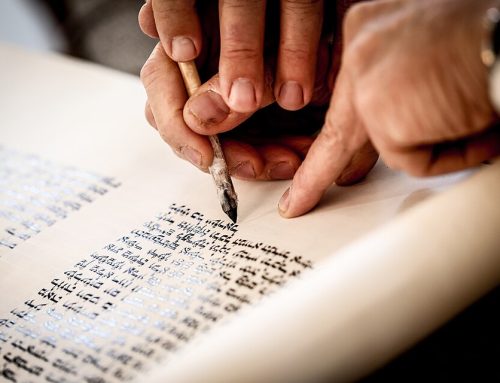
The Old Testament was written primarily in Hebrew, the principal language of the Jewish people at the time. The New Testament was written in Greek. It was the common language used among the numerous ethnic groups in the Roman Empire at the time of Christ. A smattering of Aramaic also appears in some of the original manuscripts. Aramaic is similar to Ancient Hebrew. It was the common language spoken by Jews and other Semitic peoples around the time of Christ.
Ancient Translations
Over the centuries, the Bible has been translated into thousands of languages. Perhaps the earliest written translation is the Septuagint (LXX), a Greek translation of the Hebrew scriptures. Begun c. 280 BC, the Septuagint was completed more than a hundred years before the time of Christ. Because Greek was the common language of the time, New Testament writers often quoted from the Septuagint version of the scriptures.
Syriac manuscripts are known from as early as the first and second centuries AD. Syriac is a late form of Aramaic.
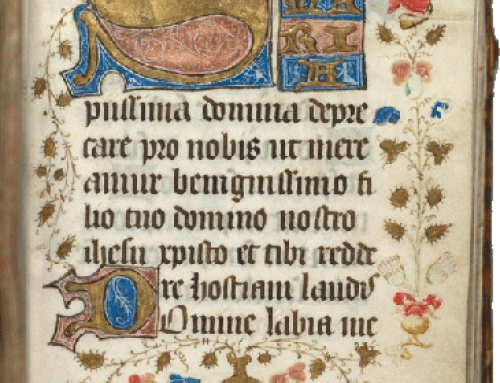
Latin was the common language of the Roman Empire. So, in 382 AD, Pope Damasus commissioned Jerome to create a standardized Latin version of the Bible. Jerome used original Hebrew manuscripts rather than relying solely on the Greek Septuagint when compiling his Latin Vulgate. The Catholic Church considered it the only authoritative version of the Bible until the 20th century.
Translation into Modern Languages
The translation of the Bible into modern languages was one of the driving forces behind the Protestant Reformation. Another catalyst was Gutenberg’s invention of the printing press c. 1440, placing the Bible into the hands of the common people.
The first major English translation was the Wycliffe Bible, translated from the Latin between 1382 and 1395.
About 75 years later, William Tyndale translated the New Testament from original Greek manuscripts and portions of the Old Testament from the original Hebrew. His New Testament was published in 1526. Tyndale was arrested and put to death in 1536 for heresy because of his work. Myles Coverdale completed Tyndale’s Old Testament translation and published the Tyndale Bible in 1535.
In 1611, King James I of England commissioned a new Bible in English. The King James Version, based in part on Tyndale’s translations, became the standard text in the English speaking world until the late 19th century. The Revised Version, an updated British version of the King James, was published in 1881. An American revision, the American Standard Version, was published in 1901.
Methods of Translation
Today there are more than a hundred modern versions of the Bible in English alone. Due to differences in translation methods, some versions read as more formal, others as more conversational. The formal equivalence method attempts to stick closer to the words of the original language at the risk of less clarity in the common vernacular, while the dynamic equivalence method attempts to express the thought behind the words at the risk of losing richer meaning. Practically speaking, the two translation methods result in very similar translations, but some readers prefer one style over the other.

A third option is a paraphrase. While not strictly a translation, a paraphrase offers even greater readability at the cost of the accuracy of the text. A paraphrase takes the idea of dynamic equivalence a step farther, introducing more of the vernacular (and the author’s interpretation) into the text. A paraphrase may be useful for devotional reading, but a true translation is recommended for study.
Many people find that comparing translations provides richer understanding. My favorite English language versions are the New American Standard (NASB) for study, the New International Version (NIV) for comparison, and the New Living Translation (NLT) for more devotional reading.
How Many Languages?
As of this writing*, Wycliffe Bible Translators report over 7,400 known living languages in the world, spoken by over 8 billion people. Of those, Wycliffe has produced or is working to complete translations in more than 2,800 languages. As of April 2026, they report 514 languages that do not have a translation.
Because some people groups do not have a native written language, Faith Comes By Hearing has partnered with Wycliffe Global Alliance to provide audio Bible translations in both written and unwritten languages. Currently audio Bibles are available in 2,633 languages*.
∗ The work of translation is ongoing. Visit the respective websites for up-to-date statistics.



Leave a Reply