 The term canon refers to a rule of law or doctrine that has been established by an authoritative council. We speak of the canon of Scripture referring the list of books established as authoritative and accepted by Christians as Holy Scripture.
You may wonder. If the Bible is a collection of books, how do we know which books belong in the Bible? Why are these particular books included, but others are not?
The Old Testament Canon
When it comes to the books of the Old Testament, Christians adopted the Jewish canon. These books were written by Jewish leaders and scribes who recorded the history of the Jewish people and the preaching of the Jewish prophets. By the time of Christ, these books had been recognized as authoritative by the Jewish people for hundreds of years.
First century Jewish historian Flavius Josephus confirms that although other books were written after the time of Persian King Artaxerxes (c.465-424 BC), they were not considered canon by the Jews.
“From Artaxerxes until our time everything has been recorded but has not been deemed worthy of like credit with what preceded, because the exact succession of the prophets ceased. But what faith we have placed in our own writings is evident by our conduct; for though so long a time has now passed, no one has dared to add anything to them, or to take anything from them, or to alter anything in them.” Josephus, Contra Apion I
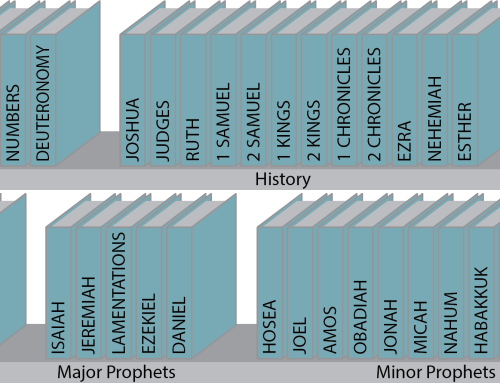
In the same document, Josephus named the number of “justly accredited” books as twenty-two. In his day, Jeremiah was combined with Lamentations into a single volume and Ruth with Judges, thus bringing the 24 books of the modern Tanakh to 22.
When comparing the Christian Old Testament to the Tanakh, the Tanakh combines the minor prophets into The Twelve, Nehemiah into Ezra, and Samuel, Kings, and Chronicles into single volumes. Thus the number of books in the Tanakh is counted as 24, but in the Old Testament as 39.
In addition to Josephus’ testimony, we have the Mishnah, a written record of the oral teaching of the Jewish rabbis completed around 200 AD. In the Mishnah, rabbis discuss the 24 books of the Tanakh extensively, confirming that they considered them to be Holy Scripture. The books of the Old Testament are also quoted liberally by the authors of the New Testament.
The New Testament Canon
We have more information about the formation of the New Testament canon than the Old. The books were written between about 50 and 100 AD, but even before the books had all been completed, heresies had arisen. As time went on, it became apparent that an authoritative list was needed to distinguish true teaching from false.
We know that by the year 300, and likely well before that, all four of the gospels, the Acts of the Apostles and most of Paul’s letters were accepted as authoritative. Others were still in question. In 367 AD, Athanasius, bishop of Alexandria, composed a list of the 27 books in our present-day New Testament which he considered canon. The same collection was recognized by the Council of Hippo in 393 A.D. and confirmed by the Third Council of Carthage in A.D. 397.
This confirms the fixing of the canon within about 250-300 years of their writing.
Recognized, Not Chosen
Contrary to what some people believe, determining which books were trustworthy was not a matter of picking and choosing between potential candidates, but of testing and recognizing the authoritative status the books had already attained. In A General Introduction to the Bible, authors Geisler and Nix expressed it this way, “Canonicity is determined or fixed authoritatively by God; it is merely discovered by man.”
In other words, books were not included in the New Testament because they were popular, but because they had proven themselves to speak with accuracy, authority and reliability over a span of the previous 250-300 years.
In determining which books should be declared authoritative, the leaders of the early Church who gathered at Hippo and Carthage applied five tests to every prospective book:
- Is it authoritative? Does the text itself claim to speak with divine authority? [e.g. “Thus saith the Lord…”]
- Is it prophetic? Was it written by a known prophet, apostle, or man of God?
- Is it authentic? If there was even the slightest doubt or disagreement regarding the authenticity of the book, it was disqualified. The maxim was, “If in doubt, throw it out.”
- Is it dynamic? The leaders of the early Church recognized that the life transforming power of God should be evident in the lives of those who take the book to heart and put its words into practice in their lives.
- Has it been consistently received, collected, read and used by God’s people? By the time the canon was firmly established, nearly three hundred years of experience had testified to the authority of the books which were truly inspired by God.
From the perspective of the 21st century, it would be difficult to convene a council to answer the questions that these leaders were able to answer. But remember, these men lived within a handful of generations of the actual events. And they lived within a culture where tradition and teaching were more carefully and purposefully passed down from generation to generation in comparison to what many experience in modern Western culture.
The members of the Councils of Hippo and Carthage had access to written works from the early church fathers when making their determinations. These included works written by first and early second century Church leaders such as: Clement of Rome, Polycarp, Ignatius, Justin Martyr, and Irenaeus. The authority of such men was unquestioned. Clement of Rome had ministered as an associate of Paul and Luke. Ignatius and Polycarp had been taught by the Apostle John. And Irenaeus, in turn, was a student of Polycarp.
Many Early Church Fathers quoted from the books of what became our New Testament, demonstrating that they considered them to be authoritative. The church fathers of the second and early third centuries were particularly prolific in their usage of Scripture.
What about the Apocrypha?
There is another group of books that were written between about 200 BC and 400 AD that are referred to as Apocrypha by Protestants and as deuterocanon by Catholic and Orthodox churches.
Some of these Apocryphal books are mentioned in the commentaries of Jewish rabbis from the third, fourth, and fifth centuries. However, they were never given the status of canon by the Jews.
Although Jerome (c.345-420) acknowledged that the books were not part of the Jewish canon, they made their way into the Old Testament of Jerome’s Latin Vulgate. However, they were only given the status of deuterocanon by the Roman Catholic Church more than a thousand years later, in 1546 AD.
Modern translations of the Bible that contain Apocryphal books vary in exactly what additional material they contain and in where it is placed in respect to other Old Testament books. Depending on how they are organized, most Catholic Bibles contain an additional 14 or 15 books not found in Protestant Bibles.
The Protestant Reformation of the 16th century brought old questions about the Apocrypha back into focus. “Sola Scriptura,” meaning “Scripture alone,” was the cry of the Reformation, placing the authority of Scripture above every other earthly authority. Because there were lingering questions about whether these books satisfied the tests of canon, and because they were not included in the authoritative Jewish canon, the Apocrypha are not included in Protestant Bibles. However, many Protestants recognize that Apocryphal books provide historical, cultural and sometimes spiritual insights.
[Geisler, Norman L. and Nix, William E., A General Introduction to the Bible. Chicago: Moody Press, 1968.]


Leave a Reply