The Bible is a collection of books written by multiple authors over a span of many years.
Thirty-nine of the books are organized into the Old Testament. These are the oldest books in the Bible, written over a span of about 1000 years between c. 1500 BC through c. 420 BC. One of the books, the book of Job, may have been written even earlier.
The books of the Old Testament chronicle how God revealed Himself to humanity and made known His plan of salvation, primarily through His dealings with the Jewish people. They include books of law, of history, of poetry, wisdom, and prophecy. The 39 books of the Old Testament are also found in the Jewish Tanakh, although organized a differently.

The remaining twenty-seven books of the Bible make up the New Testament. They were written between about 50 AD and 96 AD. Four of the books, the gospels, are historical accounts of the life, ministry, death, and resurrection of Jesus Christ, the Son of God. Acts is a history of the early Church. The majority of the books are letters written to and by the early followers of Jesus to provide teaching and guidance for the early followers of Jesus Christ. The last book is Revelation, a book of prophecy.

Chapters and Verses
With the exception of a few books filled with poetry and song, the books of the Bible were originally written as long, continuous narratives. This made it difficult to locate specific passages to read and discuss.
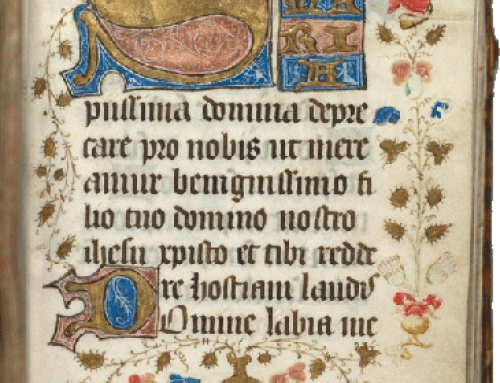
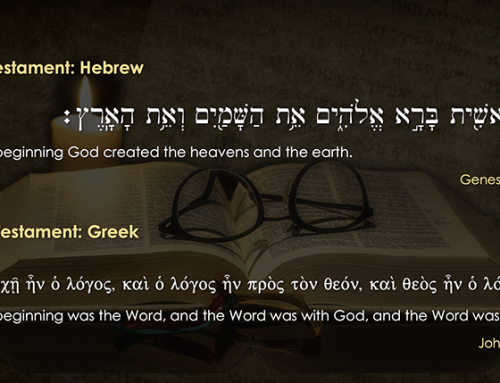
Over the centuries, readers found it helpful to break up the ancient narratives into sections and eventually into chapters. The chapter divisions used today are attributed to Stephen Langton, Archbishop of Canterbury, in 1227 AD. His chapter divisions were originally applied to the Latin Vulgate. Later, they were applied to original Greek and Hebrew texts and eventually to modern translations.
About 300 years later, in 1551, French scholar and printer, Robert Estienne (aka Robert Stephanus) added verse numbers to Langton’s chapters. Gathering together numerous original Greek manuscripts from all over Europe, Estienne compiled and published a Greek New Testament with chapter and verse divisions, called the Textus Receptus. The Geneva Bible, an English language translation first published in 1560, included Estienne’s verse divisions for both the Old and New Testaments.
Today, we use these chapter and verse divisions to provide a convenient way to locate specific passages as book, chapter, and verse. For example, the sixteenth verse of the third chapter of the Gospel of John is written as John 3:16. Book names are usually abbreviated.
It’s important to remember that these divisions have been added for convenience and were not in the original text. Therefore, when reading, the chapter and verse divisions sometimes seem to be placed in odd locations. This is due, at least in part, to grammatical differences between the original language and its translation.
It’s also important to remember that individual verses or passages of Scripture were meant to be read in the context of a larger discussion or story. Just as our own words can sometimes be taken out of context and misunderstood, the same is true of the Bible. Reading a verse or short passage of Scripture within the larger context of its book and chapter provides a greater and more accurate understanding of the author’s intended meaning. Comparing the text to similar Biblical passages is also helpful.
What About the Apocrypha?
There are a handful of books that are included in Catholic and Orthodox Bibles that are not found in Protestant Bibles. These are usually called apocryphal by Protestants, but deuterocanonical in the Catholic and Orthodox traditions. These Jewish books were written primarily in the years between the end of the Old Testament and the birth of Jesus. Protestants do not include them in their Bibles because the Jews to not consider them to be scripture.
For further study, read Why Are These Books Included in the Bible, But Others Are Not?


Leave a Reply