 The Bible is more than a religious text, it relates the experiences of real people. It tells us about historical events. And it reveals how God has taken an active part in the lives of real people and the events of their lives.
If the Bible is historically accurate, we should expect to find evidence to support the reliability of Biblical accounts. In this article, I want to briefly share a few of the many sources of evidence we have that support the reliability of Biblical history.
What Kind of Evidence Should We Expect to Find?
When it comes to the people and events of the ancient world, we have three primary sources of evidence: archaeology, written records, and biological remains. Practically speaking, we have only two sources, because ancient biological remains fall under the umbrella of archaeological evidence.
Archaeology provides tangible evidence of past human cultures and events through artifacts and other physical remains. Before the development of modern archaeological methods in the late 19th century, the search for antiquities or curiosities was usually carried out by treasure hunters and grave robbers. Their goal was to locate objects of value with little concern for their historical or cultural context.
On the other hand, modern archaeologists perform careful excavations that yield a wealth of historical and cultural information. Modern archaeological finds provide both direct and indirect evidence for the people and events described in the Bible. Visit my Archaeology page for examples.
Written Records: Manuscripts
Like biological remains, written records sometimes fall under the umbrella of archaeology. Archaeologists continue to find durable artifacts, like pottery shards or stele, inscribed with the names of people and events mentioned in the Bible.
On the other hand, manuscripts written on parchment are fragile and do not always survive. Fortunately, documents that are deemed important are often duplicated and carefully preserved.
Early Extra-Biblical Christian Sources
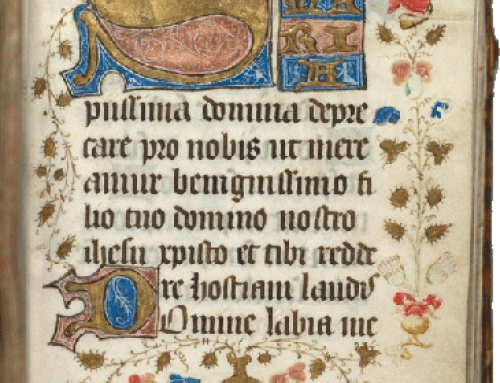
Many ancient manuscripts have been preserved and their contents made available to us in modern formats. For example, we have a readily accessible published work known as the Ante-Nicene Fathers. This is a ten volume collection of selected works from dozens of the leaders of the early Church. There is a similar published set of 28 volumes containing works from 60 to 80 Nicene and Post-Nicene Fathers. The 19th century editors who produced these anthologies gathered Greek and Latin works written by the most influential of the early theologians. These collections are by no means exhaustive. But such works not only support the canon of Scripture through direct and indirect quotes, but they give insights into the people and experiences of the early Church.
Another well-known historical source is a ten-volume history of the early church written by the 4th century bishop, Eusebius of Caesarea (d.339 AD). Although there were some questions about his personal theology, Eusebius’ work is historically invaluable. His Ecclesiastical History includes Greek translations of numerous contemporaneous written works that have since been lost. It also includes original narratives based on verbal and written sources available in his time.
Some people may, understandably, object if only manuscripts from Christian writers are presented as evidence for the reliability of the Bible. We should expect Christians to discuss the people and events described in the Bible, shouldn’t we? But do we have manuscripts from other sources?
The truth is, the majority of ancient manuscripts from the first and second centuries simply do not survive. The reason we have a wealth of early Christian manuscripts is that they were highly valued by the Christian community. They were carefully copied and shared. Even so, we do have other sources.
Flavius Josephus
Flavius Josephus (c.37-100 AD) was a notable first century Jewish historian. In his Antiquities of the Jews, Josephus retells the history of his people up through his time. He begins with Creation and ends with the destruction of Jerusalem by the Romans in 70 AD. Because Jesus and his early followers were Jews, we find them mentioned in Josephus. For example, he writes regarding
- the circumstances surrounding the death of John the Baptist [book 18, chapter 5.1-5.2],
- the appointment of Pontius Pilate to Judea [book 18, chapter 2.2],
- a brief summary of the ministry, death, and resurrection of Jesus Christ including that His followers were known as “Christians” [book 18, chapter 3.3],
- the delivering of James, brother of Jesus, to be stoned [book 20, chapter 9.1].
Roman Sources
When we reach beyond Jewish and Christian sources, we find fewer examples. This should not surprise us. After all, it would have been unusual for non-Christians of the day to concern themselves with an obscure Jewish religious leader and His followers. Roman historians wrote about typically Roman concerns, like Roman culture, Roman wars, and Roman politics. However, we do have some Roman accounts relating to the New Testament because, at times, they touched on Roman affairs.
Suetonius (69-122 AD), a second century Roman historian, records that emperor Claudius expelled both Jews and Christians from Rome. He writes,
“As the Jews were making constant disturbances at the instigation of Chrestus, he expelled them from Rome.” Life of Claudius, 25. 4
He also writes,
“Punishment by Nero was inflicted on the Christians, a class of men given to a new and mischievous superstition.” Lives of the Caesars, 26. 2
Pliny the Younger (61-113 AD) was an early 2nd century Governor of Bithynia in Asia Minor. He wrote to Emperor Trajan asking whether he should continue to execute all, or only some, of the Christians who refused to curse Christ and worship the emperor’s statue. Of the Christians Pliny writes,
“They affirmed, however, that the whole of their guilt, or their error, was that they were in the habit of meeting on a certain fixed day before it was light, when they sang in alternate verse a hymn to Christ as to a god, and bound themselves to a solemn oath, not to any wicked deeds, but never to commit any fraud, theft, adultery, never to falsify their word, not to deny a trust when they should be called upon to deliver it up.” Epistles X. 96
Cornelius Tacitus (55-120 AD) was another early 2nd century historian and Governor of Asia. He writes regarding the great fire of Rome,
“Hence to suppress rumor, [Nero] falsely charged with the guilt, and punished with the most exquisite tortures, the persons commonly called Christians, who were hated for their enormities. Christus, the founder of the name, was put to death by Pontius Pilate, procurator of Judea in the reign of Tiberius…” Annals XV 44
Such tidbits verify the historical reality of Jesus and the early Christians.
Explaining the Darkness
There is an interesting account that not only illustrates how ancient writings are sometimes preserved, but it is an account that touches on Biblical history. The three synoptic gospels tell us that when Jesus hung on the cross, darkness fell upon the region from about the sixth hour until the ninth hour (Mark 15:33-39, Matt. 27:45-54, Luke 23:44-47).
Julius Africanus (c.160-240 AD) wrote a History of the World c. 220 AD. In it he quotes from an earlier history written by a man named Thallus c. 50 AD. Both of these works have largely been lost. But Africanus was cited in Chronicle, written by the Byzantine historian Georgius Syncellus c. 800 AD.
According to Syncellus, Africanus writes this in reference to the darkness described in the gospels,
“In the third book of his history Thallus calls this darkness an eclipse of the sun–wrongly in my opinion.”
This account is interesting for three reasons. First, it tells us that the darkness described in the gospels was still being discussed twenty or so years after it occurred. Second, it was enough of a significant event that Thallus thought it worthy of recording in his history. Third, people were looking for a natural explanation for something that otherwise could only be seen as miraculous.
Africanus was correct, of course. The darkness that fell when Jesus was crucified could not have been caused by a solar eclipse for two reasons. One is its duration. The darkness lasted for three hours. Solar eclipses last at most several minutes. The second reason is because Jesus was crucified during the feast of Passover. The Jewish calendar is based on the cycles of the moon. Months always begins at a new moon. Passover falls on the 14th of Nisan, during the full moon. Solar eclipses always occur during the new moon phase due to the celestial relationships between sun, moon, and earth. They cannot occur during a full moon phase.
Be sure to check my Recommended Resources page for additional Evidence for Biblical Authority.
Here are some links from the Christian Classics Ethereal Library (CCEL.org) to get you started:



Leave a Reply